In key sectors including semiconductor wet processing, high-purity reagent transfer and biopharmaceutical consumables, high temperature resistance, superior corrosion resistance and ultra-high purity have become decisive factors for production line stability and product yield. PFA (Perfluoroalkoxy alkane), known as the "King of Plastics", features wide-temperature stability, excellent chemical inertness, low leaching and reliable electrical insulation. Nevertheless, it comes with significant processing challenges. Stable conversion of high-performance PFA into high-purity tubes, films, labware and precision components has become a critical task for the localization of fluoropolymers.

Why is PFA called the "King of Plastics"?
PFA's core advantages stem from its stable carbon‑fluorine bond structure. This structure enables it to maintain outstanding performance under wide temperature ranges and aggressive chemical media, making it suitable for working conditions with stringent requirements for purity, reliability and safety.
PFA's prominent properties are listed below:
Wide operating temperature range:Continuous service temperature from -200℃ to 260℃, excellent thermal stability across -270℃ to 260℃ with an extremely low brittleness temperature.
Outstanding corrosion resistance:Resistant to nearly all chemicals including concentrated sulfuric acid, strong alkalis, organic solvents and strong oxidants, ideal for harsh chemical environments.
Ultra-high purity:Total metal ion leaching can be lower than 0.1 ppb, meeting semiconductor-grade ultra-high purity standards.
Superior electrical insulation:Insulation performance is barely affected by temperature, suitable for high-temperature and high-frequency electrical applications.
Low friction and self-lubrication:Friction coefficient between 0.05 and 0.08 with non-stick surface, ideal for precision sliding and sealing parts.
Better mechanical performance than conventional PTFE:High tensile strength, elongation at break of 100%–300%, improved creep resistance and compressive strength.
Excellent biocompatibility:Non-toxic and physiologically inert, applicable for medical devices and laboratory utensils.
Autoclavable:Tolerates autoclaving at 121℃, 15 psi for 20 minutes. Not gamma-ray sterilizable, as irradiation will cause cracking.

Why is equipment critical for processing the "King of Plastics"?
Despite its exceptional properties, PFA is difficult to process. Its molding temperature window is generally 350℃–400℃. Once the temperature exceeds 420℃, PFA may decompose and release corrosive fumes. Meanwhile, molten PFA is corrosive to metals. Ordinary dies and flow channels are prone to erosion, which introduces metal contamination and compromises PFA's core high-purity advantage.
Accordingly, PFA extrusion imposes three strict requirements on equipment:
- Precise temperature control to avoid local overheating, thermal decomposition and part defects;
- Corrosion-resistant flow channels and dies to minimize metal leaching and preserve high purity;
- High process stability for consistent production of tubes, films and precision components.
- Standard extrusion lines are therefore hardly capable of meeting the demanding requirements of high-end PFA applications.

POTOP Precision Extrusion Equipment: A Reliable Solution for High-Purity PFA Molding
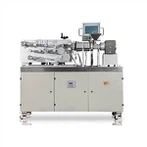
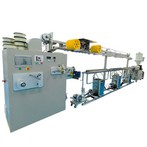
POTOP has developed a precision extrusion platform tailored for specialty fluoropolymers based on PFA's material characteristics and processing difficulties. The platform covers PFA tube extrusion, cast film production, specimen preparation and small-batch trial manufacturing.
Putong equipment is optimized to address major PFA processing pain points with the following strengths:
1. High-precision temperature control to secure the narrow molding window
PFA is highly temperature-sensitive with a narrow processing window. Putong precision extruders adopt multi-zone high-precision temperature control systems, stably maintaining the temperature within 350℃–400℃ to reduce local overheating and lower decomposition risks.
This is especially vital for high-purity applications. More stable temperature control delivers a more uniform thermal history for the material, reducing internal stress, surface defects and leaching risks of finished parts.
2. Corrosion-resistant flow channel and die design to safeguard material purity
Molten PFA corrodes ordinary steel, which degrades the cleanliness of finished products. Putong applies corrosion-resistant construction and special die surface treatments for PFA processing. Dies can be chrome-plated or made of corrosion-resistant alloys to cut down metal ion leaching and help customers retain PFA's high-purity performance.
This capability is indispensable for semiconductor wet chemical pipelines, high-purity reagent transfer components and biopharmaceutical consumables.
3. Support for multi-form product development to shorten material validation cycles
PFA can be fabricated into tubes, films, sheets, test specimens and precision parts. The Putong precision extrusion platform supports molding validation of various product forms, bridging lab formulation development and small-batch trials while mitigating scale-up risks.
Compared with general-purpose machinery, this specialty polymer molding platform is well suited for R&D and industrialization of high-performance fluoroplastics.
4. Establish PFA manufacturing specifications from equipment to process
PFA requires careful control not only during extrusion but also in post-treatment and cleaning. For instance, PFA products should only be cleaned with soft sponges; hard brushes will scratch the surface. Autoclaving is acceptable, while gamma irradiation sterilization must be avoided.
Beyond equipment supply, Putong provides process recommendations aligned with PFA properties to help customers build standardized workflows for molding, demolding, cooling, cleaning and quality control.


Against the backdrop of import substitution for high-end fluoroplastics, raw material breakthrough is only the first step for PFA. To enter semiconductor, biopharmaceutical, new energy and high-purity chemical markets, manufacturers must solve challenges including molding stability, purity retention, part consistency and production scale-up.
POTOP positions itself not merely as machinery vendor, but as a provider of verifiable, repeatable and scalable extrusion solutions for specialty polymer molding.
In addition to PFA, POTOP equipment supports a wide range of high-performance materials such as ETFE, PP, PEEK and EVOH. Our clients include new material developers, university research labs, fluoroplastic processors, semiconductor consumable manufacturers and medical component producers.