Many common products, such as cell phones and headlights, have invisible protective vents (sometimes called protective vents) inside. The vents are made of a durable, versatile material called PTFE or polytetrafluoroethylene.
Typically, porous PTFE is a material that allows air and other gases to pass through while blocking larger molecules, such as water, from entering. Its unique composition makes it an ideal choice for protective vents.
ePTFE is a microporous membrane made of polytetrafluoroethylene by expansion and stretching. Experiments have found that the surface of the PTFE membrane is covered with fibrillar micropores, with up to 9 billion micropores per square inch. The cross-section is a network structure, and the three-dimensional structure of the pores has very complex structures such as mesh interconnections, pore nesting, and channel bending. The diameter of a water vapor molecule is 0.0004 microns, while the diameter of the smallest light mist in rainwater is 20 microns, and the diameter of drizzle is as high as 400 microns. The diameter of polytetrafluoroethylene micropores varies from 0.1 to 0.5 microns, and the pore diameter is between water vapor and rainwater, so it is a top waterproof and breathable material. The composite fabric is made of expanded polytetrafluoroethylene film (ePTFE) and polyester fiber laminated by a special process.
The sintered waterproof breathable membrane is prepared by sintering the PTFE substrate. This type of breathable membrane is relatively brittle and easy to puncture. It is more suitable for scenes with severe temperature rise or explosion, and the film needs to "self-explode" to quickly release pressure. The "self-explosion" behavior of the sintered waterproof breathable membrane can be determined by its own strength, or it can be achieved through external puncture structure intervention.
Microstructure of stretched and sintered waterproof breathable membranes

ePTFE application areas
Medical field: artificial blood vessels, heart patches, dialysis membranes, medical sutures, etc.
Filtration field: air filters, liquid filters, gas separation membranes, etc.
Textile field: waterproof and breathable fabrics, outdoor sportswear, etc.
Industrial field: high-temperature seals, corrosion-resistant pipes, cable sheaths, etc.
Aerospace field: space suits, aerospace seals, etc.
When it comes to protective vents and barriers within devices, polytetrafluoroethylene, or PTFE, plays a key role. However, not all PTFE is created equal, and it's critical to grasp the difference between two main variants: expanded polytetrafluoroethylene (ePTFE) and sintered PTFE. The two materials may share a common goal of providing a breathable barrier, but they differ significantly in durability, support requirements, airflow characteristics, and water resistance.
Expanded PTFE (ePTFE) has a unique lightweight structure with thicknesses as low as 0.02 mm, providing a thin yet effective barrier in sensitive applications. Its fragile nature may require careful handling to maintain its integrity, highlighting its precision engineering.
In stark contrast, sintered PTFE exhibits extraordinary strength. Sintered PTFE maintains its integrity even when physically contacted, making it a reliable choice for a variety of applications.
The delicate sensitivity of ePTFE requires strategic support, which is usually achieved by laminating it to the fabric, thereby improving its durability without compromising its inherent performance. This approach allows protective vents to combine the permeability of ePTFE with the advantages of structural integrity. Sintered PTFE has inherent strength and does not require additional support. Its ability to be ultrasonically welded to plastic parts simplifies the manufacturing process and provides a direct solution for a variety of applications.
Airflow is a key factor in many applications, and ePTFE is designed to provide controlled airflow. The microporous structure of the e-PTFE membrane can remove more and faster brain vapor from the body, so that sweat vapor does not accumulate and condense between the body surface and the fabric, keeping the human body dry and comfortable. The general test value is 10000g/m224h, that is, 10000 grams of water vapor passes through each square meter of PTFE membrane in 24 hours. General waterproof and breathable fabrics are only 2000-3000g/m224hr. Moisture permeability: The specification of moisture permeability is g/m2/24h (grams per square meter per 24 hours). Sintered PTFE is known for its consistent airflow properties that are not affected by physical contact, ensuring reliable performance in applications that require continuous airflow.
Both ePTFE and sintered PTFE offer excellent water-repellency. ePTFE uniquely handles water by forming beads that easily drain, making it suitable for environments where humidity control is critical. ePTFE membranes also have the characteristic of being water-repellent. It is resistant to water pressure up to 1800mbar, meaning it is only permeable when the pressure is greater than 18 meters of water column. Sintered PTFE's ability to completely repel water without leaving residue can provide additional protection, especially in environments where care must be taken to avoid any water ingress.
ePTFE Machine Recommendation
https://www.potop-polymer.com/mdo-stretcher/mdo-longitudinal-film-stretching-machine.html
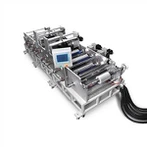
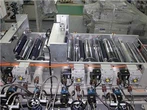
The MDO equipment is a very practical and versatile equipment that can complete a variety of tasks. As an offline stretch film machine, it can also be combined with a variety of extruders and cast film machines to create an MDO online cast film stretch machine, which is more efficient. The equipment uses a servo motor independent drive, and controls the rollers by adjusting the gap between the rollers to achieve preheating, stretching, annealing and cooling.
 facebook
  linkedin
  pinterest
  twitter
  whatsapp
  youtube
  instagram