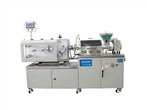
Have you ever wondered where shopping bags and food packaging film come from? The answer lies in the ingenious process of "blown film," which produces tubular polymer films by extruding molten plastic through an annular die, inflating it like a balloon, and then cooling it to set its shape. Thanks to its high productivity, minimal waste, and ability to create seamless tubing, this method has become the preferred manufacturing technology for packaging applications-such as retail bags and shrink film-as well as agricultural mulch films, accounting for a significant share of global plastic film production.
What are the main application areas of blown films? Why do different types of packaging vary so much in feel and performance? The secret often lies in the customized formulations and precise processing techniques used in blown film production. According to Grand View Research's 2024 market analysis, blown films serve five core sectors:
- Food Packaging (60%): For example, multi-layer films with EVOH barrier layers effectively preserve the freshness and crispness of snacks, complying with safety standards such as FDA 21 CFR 177.1520.
- Agricultural Films (20%): UV-stabilized LDPE greenhouse films, tested per ASTM D4329, can last for 3 to 5 growing seasons.
- Medical Packaging (10%): Blown microporous films like DuPont's Tyvek® demonstrate superior performance in infection control, making them the material of choice for sterile barrier systems.
- Consumer Goods Packaging (7%)
- Industrial Liners (3%)

| Application scenarios | Commonly used materials | Key properties |
| Retail Shopping Bags |
LLDPE |
Extremely high tear resistance |
| Heat Shrink Film |
PVC |
Elongation can reach 200%. |
| Pharmaceutical Blister Packaging |
PET/Aluminum foil |
Oxygen barrier properties <0.5 cc/m²/day |
How are blown films manufactured?
Why do production lines vary so greatly in efficiency? The key lies in the precise optimization of the following seven standardized steps (as outlined in ISO 4575:2021):
- Extrusion: For instance, our lab-scale blown film system uses a 25:1 L/D screw to ensure complete plasticization.
- Bubble Formation: Precision air rings control the cooling rate, which is critical for achieving film haze below 5%.
- Thickness Monitoring: Beta radiation sensors maintain thickness tolerance within ±3%.
- Nip Rollers: Dual-durometer roller design effectively prevents surface scratching.
- Surface Treatment: Corona treatment stations increase surface tension to >38 dyn/cm to meet printing requirements.
- Slitting: Razor or shear systems are used to ensure burr-free edges.
- Winding: Turret winders enable continuous production, ensuring 100% operational efficiency.