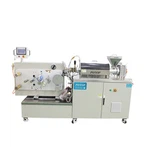
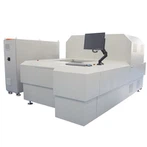
With the global emphasis on sustainable development, the energy consumption optimization of film biaxial stretching apparatus, as a key equipment for film production, has become the focus of the industry. To achieve energy saving and consumption reduction, it is necessary to comprehensively use new materials, new processes and intelligent technologies, starting from multiple links such as heating, transmission, and control, to build an efficient and energy-saving operation system.
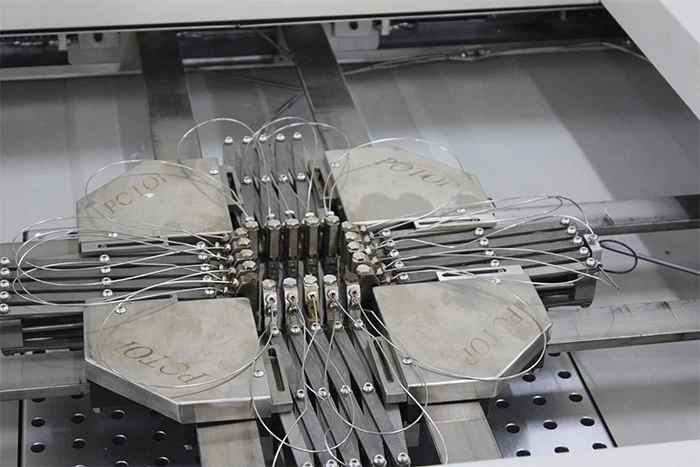
The upgrading of efficient heating systems lies at the core of energy conservation. Traditional film biaxial stretching equipment predominantly relies on resistance heating, which suffers from significant heat loss and low thermal efficiency. The new equipment can incorporate electromagnetic induction heating technology, leveraging alternating magnetic fields to generate eddy currents within metal heating elements. This directly converts electrical energy into thermal energy, boosting thermal efficiency to over 90% and reducing energy consumption by 30%-40% compared to resistance heating. Additionally, a composite heating approach integrating infrared radiation heating with hot air circulation is employed. By precisely controlling the infrared radiation wavelength and hot air temperature, this method ensures uniform heating of the film, minimizing energy waste caused by localized overheating. The outer layer of the heating cavity utilizes nano-aerogel insulation material, which features a thermal conductivity as low as 0.013 W/(m·K). This reduces heat conduction by 70% compared to traditional insulation cotton, effectively minimizing heat loss to the external environment.
The energy-saving transformation of the drive system reduces operational power consumption. Upgrading traditional asynchronous motor drives to servo motor systems enables high-precision position control and dynamic response, allowing real-time adjustment of speed and torque based on load changes during film stretching to avoid idling and overload energy loss. For instance, low-speed operation during preheating and automatic power adjustment via tension feedback during stretching can save 25%-30% electricity compared to constant-speed operation. Introducing direct drive technology eliminates belts and gears to reduce mechanical friction losses, while efficient planetary reducers boost transmission efficiency to over 95%, further cutting energy consumption.
Intelligent control system realizes precise energy consumption management. The intelligent control system equipped with AI algorithm collects parameters such as stretching temperature, speed, tension, etc. through sensors in real time, uses machine learning models to predict energy consumption requirements in the production process, and dynamically adjusts equipment operating parameters. For example, when the film thickness or material changes are detected, the system automatically optimizes the heating temperature curve and stretching speed to avoid energy waste. In addition, the integrated energy management module monitors and analyzes the energy consumption units of the equipment (heating, transmission, ventilation, etc.) in real time, generates energy consumption reports and proposes optimization suggestions. Through the intelligent control system, the overall energy consumption can be reduced by 15% - 20%.
Waste heat recovery technology improves energy utilization. During the film stretching process, a large amount of waste heat generated by the heating system is recycled through the heat exchanger. The plate heat exchanger is used to transfer the heat in the high-temperature exhaust gas to the fresh air, which is used to preheat the film to be stretched or for workshop heating, and the recovery efficiency can reach 60% - 70%. For the low-temperature waste heat generated by the cooling system, it is converted into cold capacity through the absorption refrigeration unit and used for equipment cooling or workshop air conditioning system to achieve energy recycling. Waste heat recovery technology not only reduces energy consumption in the production process, but also reduces dependence on external energy.
Waste heat recovery technology improves energy utilization. During the film stretching process, a large amount of waste heat generated by the heating system is recycled through the heat exchanger. The plate heat exchanger is used to transfer the heat in the high-temperature exhaust gas to the fresh air, which is used to preheat the film to be stretched or for workshop heating, and the recovery efficiency can reach 60% - 70%. For the low-temperature waste heat generated by the cooling system, it is converted into cold capacity through the absorption refrigeration unit and used for equipment cooling or workshop air conditioning system to achieve energy recycling. Waste heat recovery technology not only reduces energy consumption in the production process, but also reduces dependence on external energy.
Equipment maintenance and lubrication management extend the energy-saving cycle. Regularly maintain the film biaxial stretching apparatus to ensure that the equipment is in the best operating condition. Use high-performance grease to reduce friction resistance between mechanical parts. For example, grease containing nano-additives can form a self-repairing protective film on the metal surface, reducing wear and energy consumption. At the same time, establish an equipment health monitoring system to detect hidden faults such as bearing wear and transmission abnormalities in advance through vibration analysis and temperature monitoring, so as to avoid increased energy consumption due to equipment performance degradation. Standardized maintenance management can keep the equipment energy consumption stable at a low level and extend the energy-saving cycle.
Process optimization and production scheduling reduce energy waste. Optimize film stretching process parameters, and determine the optimal stretching temperature, speed and tension combination of films of different materials and thicknesses through experiments to avoid repeated processing and energy consumption caused by unreasonable parameters. In terms of production scheduling, adopt a centralized batch production mode to reduce the number of equipment starts and stops. Each start and stop will consume additional heating and cooling energy consumption; arrange production plans reasonably, give priority to the production of film products with similar temperature requirements, and reduce the frequent adjustment loss of the heating system. Through process and scheduling optimization, the overall energy consumption can be reduced by 10% - 15%.
New energy-saving materials and structural designs reduce inherent energy consumption. In terms of equipment structure design, lightweight and high-strength materials, such as carbon fiber composite materials, are used to manufacture stretching rollers and frames to reduce the overall weight of the equipment and reduce the load energy consumption of the transmission system. At the same time, new high-temperature resistant and low-friction film contact materials are developed to reduce resistance during the stretching process and reduce the energy consumption of the drive system. In addition, the internal air duct design of the equipment is optimized, and through CFD (computational fluid dynamics) simulation analysis, the hot air is evenly distributed, the heating efficiency is improved, and the energy waste caused by uneven airflow is reduced. The application of new materials and structural design provides a new technical path for energy saving and consumption reduction of film biaxial stretching apparatus.