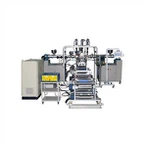
Did you know blown films are used in everything from grocery bags to medical packaging? This versatile material starts as tiny resin pellets, melts into a liquid, and is blown into thin, durable films through a unique inflation process.
In fact, blown film extrusion produces over 40% of the world's plastic films-making it one of the most cost-effective and widely used manufacturing methods. But how exactly does it work? And where do you encounter blown films daily?
Keep reading to discover the science behind this essential material and its countless applications in packaging, agriculture, and more!
What are the Major Applications of Blown Films?
Have you ever noticed how some plastic packaging stretches without tearing while others feel brittle? The difference comes down to blown film technology-a manufacturing process that creates ultra-durable, lightweight films used across industries.
According to Grand View Research (2024), blown films dominate five key sectors:
✅ Food Packaging (60%) – Multi-layer films with EVOH barriers meet FDA 21 CFR 177.1520 standards, keeping snacks fresh longer
✅ Agricultural Films (20%) – UV-stabilized LDPE greenhouse covers last 3-5 seasons (tested per ASTM D4329)
✅ Medical Packaging (10%) – Microporous films like DuPont Tyvek® provide superior sterile barriers
✅ Consumer Goods (7%) – From shopping bags to product wraps
✅ Industrial Liners (3%) – Heavy-duty protection for construction and shipping
Why do manufacturers prefer blown films?
✔ Superior strength-to-weight ratio – Thinner yet stronger than alternatives
✔ Cost-effective production – Accounts for 40%+ of global plastic film output
✔ Customizable properties – Stretchability, barrier layers, UV resistance & more
Want to know how blown films are made or which type is right for your application? Keep reading to uncover the science behind this essential material!

Why do some factories produce film at 30m/min while others max out at 10m/min? The answer lies in optimizing these 7 critical steps of blown film production (as standardized in ISO 4575:2021):
1️⃣ Extrusion – Our lab's 25:1 L/D screw ensures complete melting
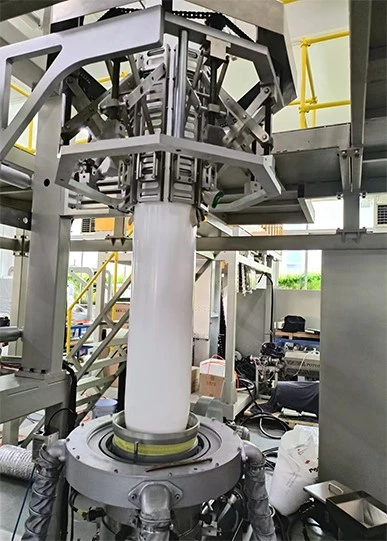
2️⃣ Bubble Formation – Precision air rings control cooling (key for <5% haze)
3️⃣ Thickness Gauging – Beta sensors maintain ±3% tolerance
4️⃣ NIP Roller – Dual-durometer rolls prevent surface scratches
5️⃣ Surface Treatment – Corona stations achieve >38 dyne/cm (print-ready)
6️⃣ Slitting – Razor/shear systems for burr-free edges
7️⃣ Winding – Turret winders enable 100% production uptime
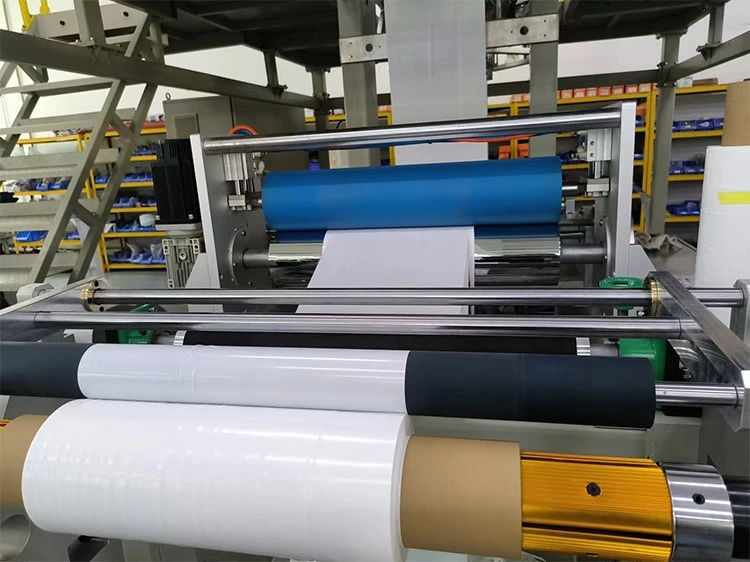
For labs needing compact systems, our POTOP Lab Blown Film Machine replicates industrial conditions in a 2m² footprint - 60% smaller than conventional units while maintaining 15kg/hr output.