In today's rapidly advancing polymer industry, the innovation of materials is largely dependent on processes such as filling, blending, and modification. In order to meet the requirements of lab-scale R&D, where small batches, diverse formulations, and high levels of precision are essential, the modular twin-screw extrusion granulation line has become the preferred choice for universities, research institutions, and corporate R&D centers.

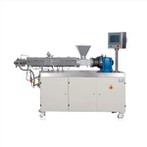
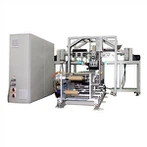
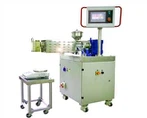
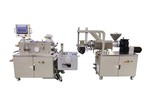
Small precision twin-screw extrusion granulation line consists of split small precision twin-screw extruder, screen changer, granulation mold, cooling water tank, air drying device, pelletizer and other modules, forming a complete experimental system. The entire production line is scientifically designed and reasonably laid out, and can achieve continuous operation from raw material melting to finished granule output. It is suitable for the processing needs of a variety of polymer materials, especially for small and pilot applications in the new material research and development stage.

Among them, the extrusion mixing system adopts a split integral barrel structure, which makes the equipment easy to disassemble, clean and maintain after the experiment, effectively avoiding cross-contamination between different materials, and improving the adaptability and flexibility of the equipment. This is especially important for laboratories that frequently change formulas or handle high value-added materials.
The essential element of this equipment is a parallel meshing co-directional twin-screw structure, characterized by its high matching precision and remarkable ability to control minute gaps. Through the judicious combination of diverse threaded elements, this structure facilitates efficient mixing, plasticization, and dispersion of materials possessing various characteristics-including those that are heat-sensitive, high-viscosity, or filled. This screw configuration, endowed with a high degree of adjustability, renders the equipment exceptionally versatile and adaptable, capable of satisfying the processing requirements of disparate material systems. It emerges as an ideal instrument for exploring the rheological behavior, compatibility, dispersibility, and other pivotal properties of materials.

In addition, the modules of the production line are smoothly connected and fully functional. The screen changer can effectively remove impurities in the melt and improve the purity of the product; the granulation mold can be replaced with different apertures as needed to achieve diversified particle output; the cooling water tank is used in conjunction with the air drying device to ensure that the particles are quickly cooled and shaped and the surface moisture is removed; finally, the pelletizer completes efficient cutting to obtain regular, dry, and easy-to-test granule products. The entire process has a high degree of automation, simple operation, and good repeatability of experimental results, which helps researchers to accurately grasp the relationship between process parameters and material properties.
This specialized twin-screw extrusion granulation line, designed with a split configuration for enhanced precision, is ideally suited for experimental research in the areas of filler modification, alloy blending, and the toughening and reinforcing of polymer materials. Its versatile applications extend across diverse industries, including plastics, rubber, biodegradable materials, and composite materials production. The equipment's modest output capacity, combined with its energy-efficient operation and compact footprint, make it exceptionally well-suited for laboratory settings. This not only conserves raw materials during testing but also accelerates the verification of formula efficacy, significantly enhancing the overall R&D process.

Not only that, small precision twin-screw extrusion granulation line also has outstanding performance in safety and intelligence. The equipment is equipped with multiple safety mechanisms such as overload protection and abnormal temperature alarm to ensure stable and reliable operation. Some models also support intelligent control systems to achieve real-time monitoring and adjustment of key parameters such as temperature, speed, and pressure, and improve the accuracy and traceability of experimental data.
In summary, small precision twin-screw extrusion granulation line has become an indispensable and important equipment in the research and development of new materials with its advantages such as flexible structure, uniform mixing, convenient operation, and complete functions. It not only meets the laboratory's needs for diversified and refined processing, but also provides scientific researchers with an efficient and stable technical platform. Choosing such a set of equipment is not only a guarantee of experimental quality, but also an effective improvement of innovative research and development efficiency. Whether in university teaching, scientific research units or enterprise technology centers, it will become an important boost to promote the advancement of materials science.