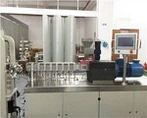
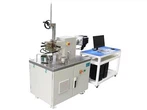
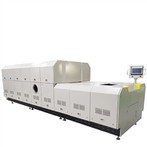
Laboratory high-temperature extruders are designed for small-batch R&D and verification of high-temperature specialty materials (such as PEEK, fluoroplastics, etc.), emphasizing micro-sampling, precise temperature control, and structural observability; ordinary extruders (including industrial high-temperature types) focus on continuous and stable mass production, sacrificing flexibility for efficiency and cost advantages.
The high‑temperature‑material extruder is engineered for special materials requiring processing temperatures above 300℃. Adopting high‑temperature‑resistant alloys and a precision temperature‑control system, it enables high‑performance‑material processing that cannot be completed by ordinary equipment in aerospace, electronics and other fields, acting as critical equipment for advanced manufacturing.
Material forming constitutes a fundamental yet vital link in industrial production. As specialized equipment for processing high‑melting‑point and high‑viscosity materials, the high‑temperature‑material extruder plays an irreplaceable role in targeted sectors. To clarify its value, we compare it with conventional extruders to illustrate its design features and applicable scenarios.

Differences in Core Operating‑Temperature Range
The most intuitive distinction lies in the operating temperature capacity of the equipment.
Conventional extruders are designed for general‑purpose plastics such as PE and PP, whose melting temperatures are generally below 200℃. Their heating systems, temperature‑control units, screws and barrels are all configured for this temperature range.
In contrast, high‑temperature‑material extruders are built for high‑temperature processing requirements. They handle materials like PEEK, polyimide, selected special‑engineering‑plastics and high‑temperature elastomers, whose processing temperatures usually exceed 300℃, ranging up to 400‑500℃.
Multiple components are upgraded accordingly: higher‑power heating systems with denser heating sections ensure uniform heating of materials to target temperatures. Temperature‑control systems deliver superior precision, since minor temperature fluctuations under high‑temperature conditions will drastically alter material properties. Most importantly, core components including screws and barrels are manufactured from premium high‑temperature‑resistant and wear‑resistant alloys to withstand long‑term harsh working conditions under high heat and pressure.

Target‑Oriented Design of Structure & Power System
Beyond temperature factors, materials tend to present higher viscosity and poorer flowability under high‑temperature conditions, which requires enhanced conveying, extrusion and plasticizing capacity from the extruder.
Conventional extruders adopt standard‑design screws with moderate length‑to‑diameter ratios, optimized for plasticization and homogenization of medium‑&‑low‑viscosity materials.
Screws for high‑temperature‑material extruders normally feature a larger length‑to‑diameter ratio. A longer screw extends the heating and shearing process inside the barrel, guaranteeing full melting and homogeneous mixing of high‑viscosity, high‑melting‑point materials. Complex screw configurations with enhanced mixing elements are also applied to break gels and unmelted particles.
Correspondingly, the motor delivers far higher power and torque than standard‑specification conventional extruders, providing sufficient thrust to overcome flow resistance from high‑viscosity melts. Gearboxes and thrust bearings are specially reinforced to bear heavy axial loads.

Requirements for Temperature‑Control Accuracy & Cooling System
In high‑temperature processing, temperature‑control precision directly determines finished‑product stability.
Although temperature accuracy matters for conventional extruders, wider temperature fluctuation tolerance is allowed. Their air‑cooling or water‑cooling systems mainly prevent equipment overheating caused by frictional heat.
For high‑temperature‑material extruders, precise temperature control is critical. Tiny temperature deviations may trigger material degradation (scorching, discoloration, bubble formation) or insufficient plasticization. Multi‑zone independent precision temperature‑control modules are equipped, with high‑accuracy sensors in each heating zone to realize closed‑loop regulation.
Cooling standards are equally stringent. Apart from avoiding equipment overheating, precise cooling on specific process sections is required to prevent thermal decomposition of materials. Advanced cooling solutions such as forced‑circulation oil cooling or closed‑loop water‑cooling with fine adjustment are deployed to achieve accurate heat management under extreme‑high‑temperature environments.

Comparison on Application Fields & Cost Structure
Differentiated design positioning leads to distinct application scenarios and cost compositions.
With mature technology, universal adaptability and relatively low procurement costs, conventional extruders are widely deployed in mass‑production lines for films, pipes, profiles, sheets and other daily‑use & industrial goods, serving as the mainstream equipment in plastic‑processing industries.
High‑temperature‑material extruders are dedicated to high‑performance‑material processing. Typical applications include special‑cable insulation layers and lightweight high‑strength composite materials for aerospace sectors; high‑temperature‑resistant connectors and insulation components for electronics & electrical industries; high‑temperature‑sterilizable medical‑device parts; and heat‑resistant pipelines around automobile engines. These applications impose strict requirements on material heat resistance, mechanical strength and chemical stability.
In terms of costs, the initial investment of a high‑temperature‑material extruder is much higher than that of a conventional extruder. The extra cost comes from premium special alloys, sophisticated mechanical structures, high‑precision temperature‑control and transmission systems. Its energy consumption and maintenance expenses during operation are also relatively high. Enterprises select high‑temperature‑material extruders out of rigid performance‑related demands, driven by the upgrading of advanced materials.

The high‑temperature‑material extruder is not a simple upgrade version of conventional extruders, but specially‑developed equipment built for high‑performance‑material processing. It sets higher standards in operating temperature, structural strength, power configuration and control precision.
Conventional extruders satisfy most polymer‑processing demands with cost‑effectiveness and universality; while high‑temperature‑material extruders provide essential support for converting advanced materials into finished products. Both types of equipment occupy their respective positions in industrial manufacturing, jointly covering production demands ranging from daily commodities to high‑tech components. A clear understanding of their differences facilitates proper equipment selection for production and technical projects.